
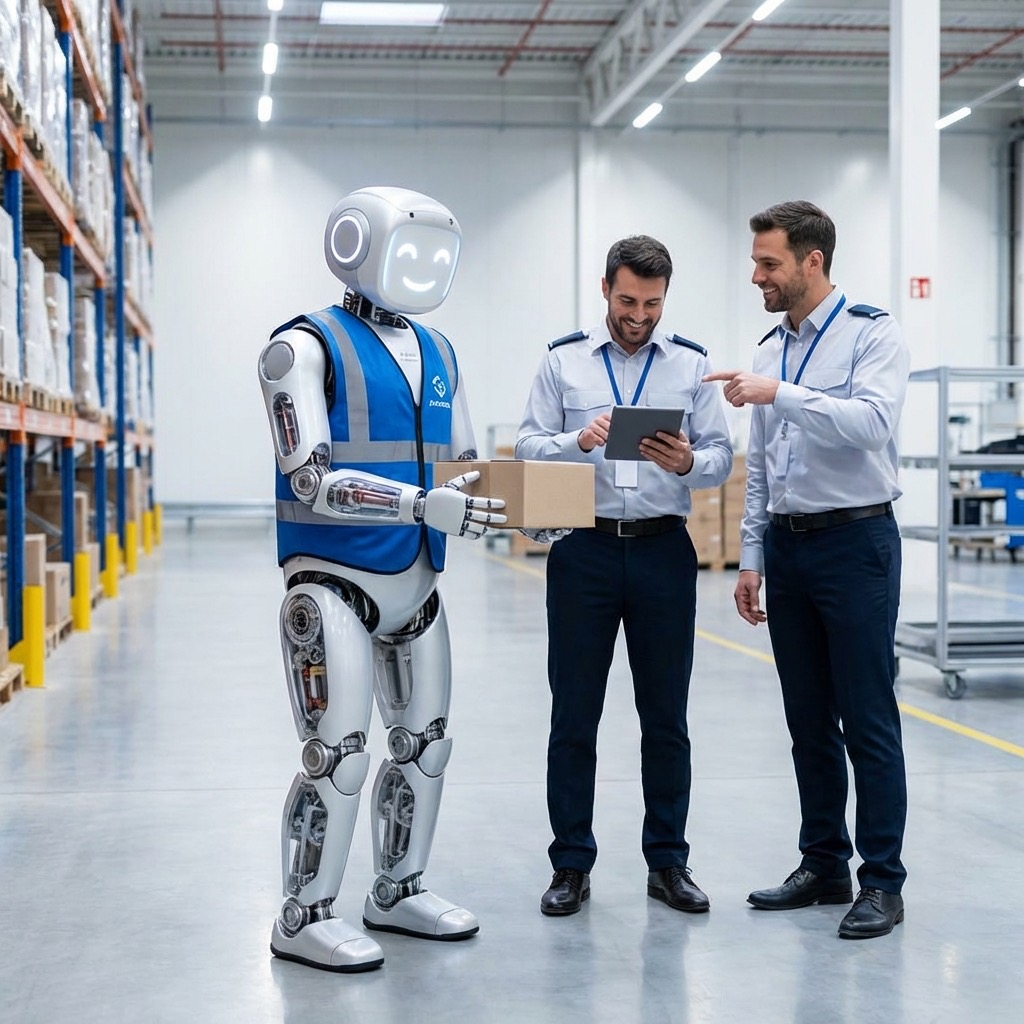
The Form Factor of Humanity
We have built the world for humans: stairs, door handles, screwdrivers, narrow aisles. To automate general labor, robots must fit this form factor. The dream of the "General Purpose Humanoid" is finally converging with reality in 2026 due to breakthroughs in two areas:
- Actuators: Motors are becoming lighter, stronger, and more energy-efficient, allowing robots to walk without bulky hydraulics.
- AI Brains: Large Vision-Language-Action Models (VLA) allow robots to learn by watching videos rather than manual coding. A robot can watch a YouTube video of someone folding a shirt and learn to duplicate the motion.
Deployment Scenarios
- Warehousing: "Brownfield" automation. Instead of rebuilding a warehouse for conveyor belts, humanoids walk existing aisles alongside humans, picking items.
- Elderly Care: Japan's aging population crisis is driving demand for robots that can gently lift a patient out of bed or fetch a glass of water.
- Hazardous Environments: Nuclear plant decommissioning, disaster recovery, or mining—places where we don't want to send people.
The Uncanny Valley & Ethics
Social acceptance is the final hurdle. As robots look more human, they hit the "Uncanny Valley"—a feeling of revulsion. Design is shifting towards "approachable machine" (like a sleek appliance) rather than "fake human" (synthetic skin). Economically, the conversation is shifting to Universal Basic Income (UBI) as we contemplate a future where physical labor has zero marginal cost.
Conclusion
Humanoids are the iPhone moment for robotics. Once hardware is standardized, the software ecosystem will explode, creating an "App Store for Labor" where you can download a "Plumbing v1.0" or "Cooking v2.4" skill to your home robot.