
Green IT: Sustainable Hardware and the Carbon-Neutral Data Center Revolution
The Environmental Cost of Digital
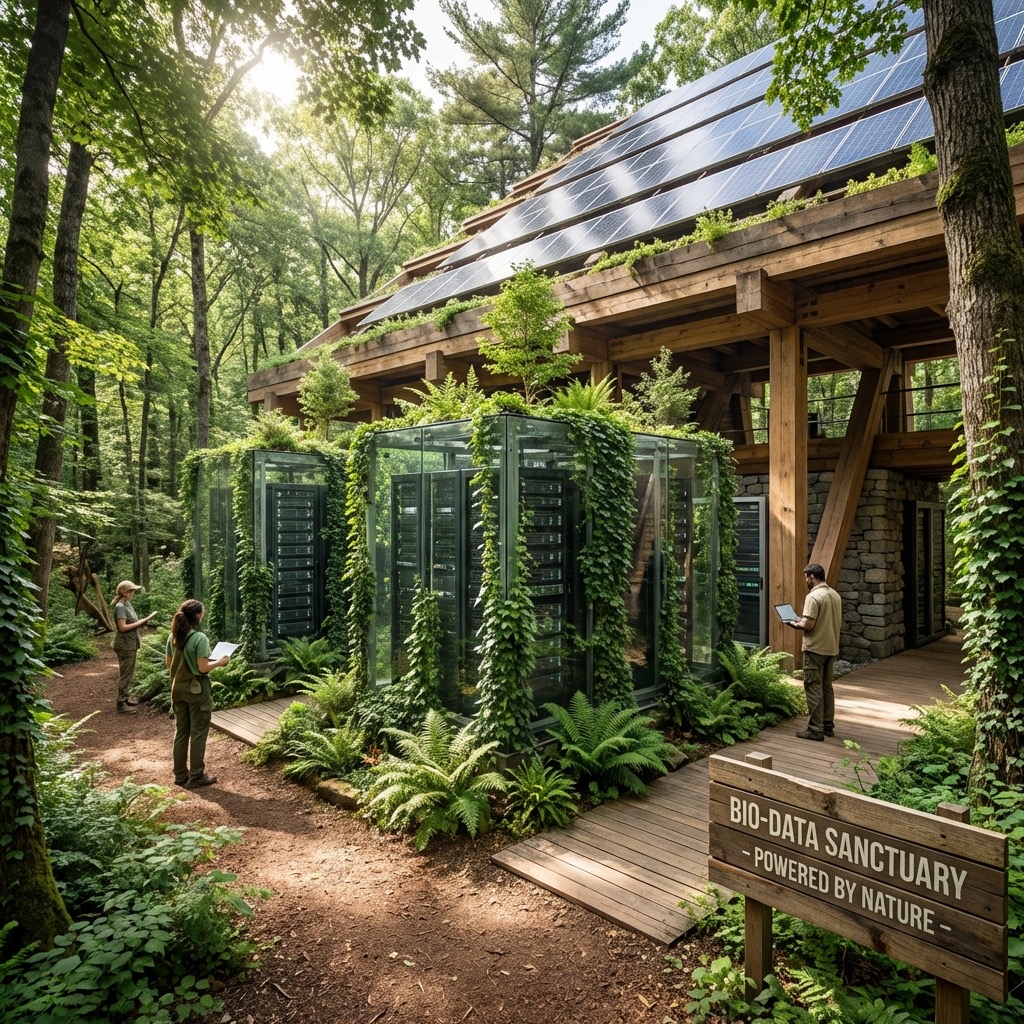
As the world digitizes, the physical footprint of the internet grows. Data centers currently consume an estimated 3-4% of the world's electricity, a figure projected to double by 2030 due to AI workloads. "Green IT" has moved from a CSR buzzword to a critical operational constraint. In 2026, sustainable technology is driving hardware innovation, software architectural decisions, and corporate balance sheets.
The Hardware Revolution: Performance per Watt
The primary metric for CPU and GPU manufacturers has shifted. It is no longer just "Floating Point Operations Per Second" (FLOPS); it is "FLOPS per Watt."
- ARM Dominance: The efficiency of ARM architectures (pioneered by mobile chips and popularized by Apple Silicon) has invaded the server room. AWS Graviton and Ampere Altra processors efficiently handle cloud workloads with significantly less heat generation than legacy x86 architectures.
- Photonics: We are seeing the first commercial deployments of silicon photonics—chips where data moves via light rather than electricity. This dramatically reduces resistance and heat, addressing the I/O bottleneck in AI clusters.
Data Center Engineering
The traditional air conditioning of server rooms is obsolete.
- Immersion Cooling: Servers are being submerged in non-conductive dielectric fluid. This liquid captures heat 1,000 times as effectively as air, eliminating the need for noisy fans and allowing for much denser compute racks.
- Waste Heat Reuse: Modern data centers in Scandinavia and Canada are acting as district heating plants, piping their waste heat into nearby residential homes or greenhouses.
Software Carbon Intensity (SCI)
Developers are now optimizing for carbon. The Green Software Foundation has standardized the SCI score.
- Carbon-Aware Computing: Software is becoming location and time-aware. A massive batch processing job might pause if the local grid is currently burning coal, waiting 2 hours until the wind picks up or the sun rises.
- Code Efficiency: Bloatware isn't just slow; it's polluting. Refactoring a Python analytics loop into Rust or C++ is now framed as an environmental action. We are seeing CI tools that flag "High Carbon Commits" based on estimated CPU cycles required.
Circular Economy in Tech
The lifecycle of hardware is extending.
- Right-to-Repair: Legislation in the EU and US has forced manufacturers to design modular laptops and phones. In the enterprise, this means modular servers where components can be swapped individually rather than trashing the whole blade.
- E-Waste Mining: Startups are using bio-leaching (using bacteria) to recover gold, palladium, and rare earths from old circuit boards, reducing the need for destructive mining.
Conclusion
Green IT is about doing more with less. It challenges the industry's obsession with "more power" and replaces it with "smart power." As energy bills rise and climate regulations tighten, the most successful tech companies of the late 2020s will be the ones that treat energy as a precious resource, not an infinite commodity.