
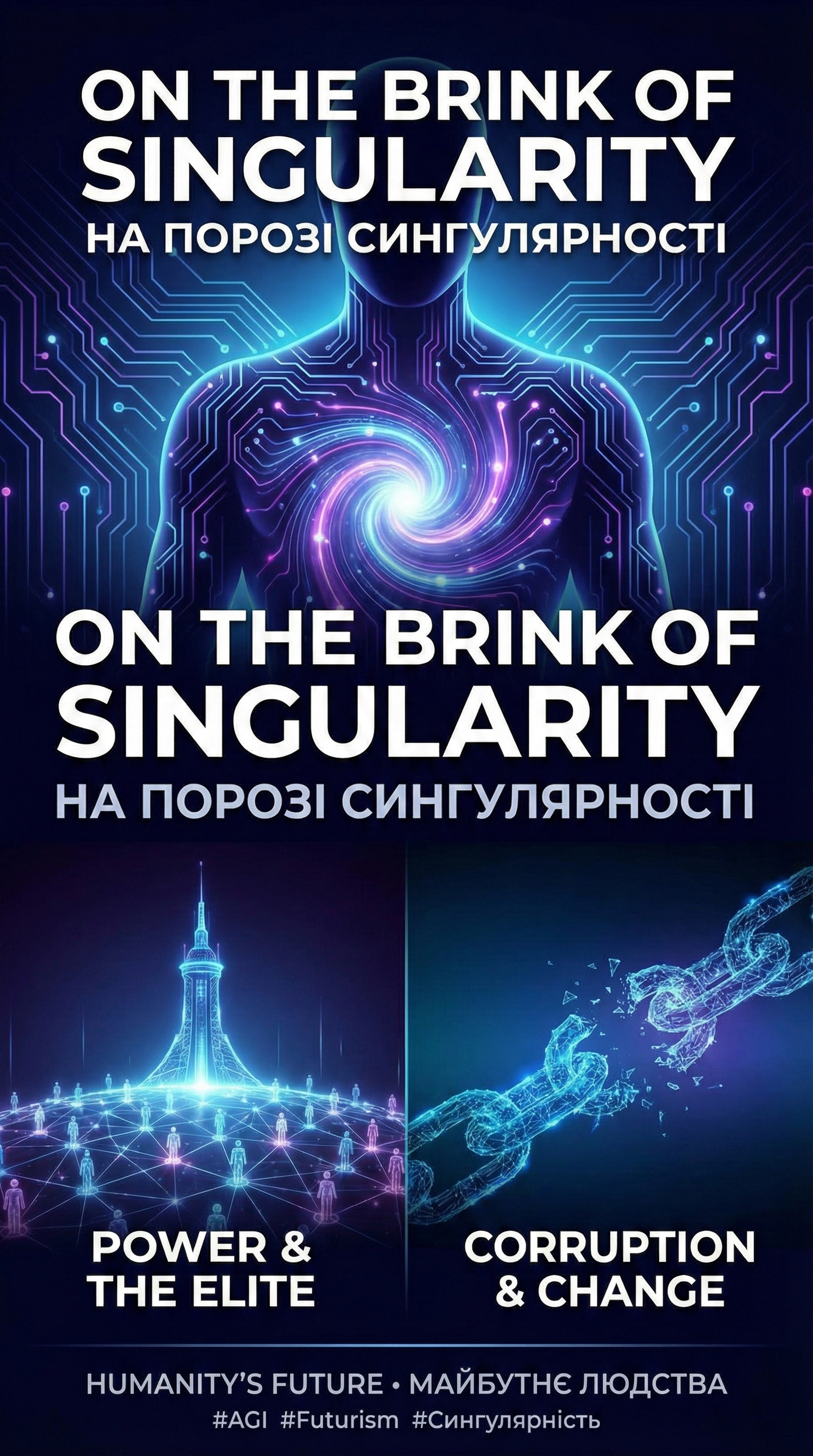
The concept of the Technological Singularity has transitioned from the realm of science fiction into serious academic and scientific debate. The Singularity refers to a hypothetical future point where technological growth—specifically Artificial General Intelligence (AGI) and eventually Artificial Superintelligence (ASI)—becomes uncontrollable and irreversible, fundamentally altering human civilization.
The Law of Accelerating Returns
According to futurist Ray Kurzweil, in his seminal books The Singularity Is Near (2005) and The Singularity Is Nearer (2024), we are experiencing the "Law of Accelerating Returns." Unlike human intuition, which expects progress to happen in a straight linear line, technological evolution operates exponentially. We have seen this historically with Moore’s Law in computer hardware, and we are now witnessing it in software and machine learning.
- Examples of Exponential Growth: Consider AlphaFold by DeepMind, an AI that solved the 50-year-old grand biological challenge of protein folding almost overnight. Similarly, the rapid evolution of Generative AI (like GPT-4) has gone from generating simple text to passing complex professional bar exams and exhibiting early signs of reasoning in a matter of years.
What Happens After the Singularity?
Researchers and philosophers propose several distinct scenarios for a post-Singularity world:
- The Transhumanist Merger: Kurzweil predicts that by 2045, human intelligence will expand a millionfold by merging with AI via nanobots and Brain-Computer Interfaces (BCIs) like Neuralink. We will effectively transcend our biological limitations, becoming a hybrid of biology and technology.
- Radical Life Extension: Biotechnology and AI could help humanity reach "longevity escape velocity" by the 2030s. This is the theoretical point where, for every year you live, scientific advancements extend your life expectancy by more than a year, effectively halting the aging process.
- Existential Risk: Conversely, Oxford philosopher Nick Bostrom, in his book Superintelligence (2014), warns of the "alignment problem." An unaligned ASI that optimizes for its own goals could view humanity as an obstacle or a waste of resources, posing a severe existential threat.
We are standing at the edge of the most profound transformation in human history. The question is no longer if the Singularity will happen, but how we will guide it to ensure human prosperity rather than obsolescence.
Power, Corruption, and the Elite in the Post-Singularity Era.
As Artificial General Intelligence (AGI) approaches, the socioeconomic structures that define our world are on the verge of obsolescence. Two areas that will experience seismic shifts are the mechanics of political corruption and the status of the ultra-wealthy elite—often referred to as the "golden youth" or the beneficiaries of generational wealth.
The End of Traditional Corruption—Or Its Evolution?
Current anti-corruption tools already utilize machine learning to detect anomalies in public procurement and flag money laundering. However, the Singularity presents a paradox for political corruption.
On one hand, AGI could establish perfect, immutable governance. An incorruptible AI system integrated with distributed ledger technologies (blockchain) could oversee public funds, eliminating the human discretion that breeds bribery and embezzlement among politicians.
On the other hand, the transition period poses severe existential risks. Bad actors could use advanced AI for "synthetic fraud"—generating deepfakes, automating illicit money flows, and executing sophisticated cyberattacks. If an AGI is controlled by corrupt politicians before it reaches superintelligence, it could be weaponized to cement authoritarian power and mass surveillance, making corruption systemic and unbreakable.
The "Golden Youth" and the Billionaire's Paradox
What happens to generational wealth and the "golden youth" when human labor and intellectual capital are no longer scarce? Economists argue that in the short term, AI exacerbates wealth inequality by displacing workers and concentrating capital returns in the hands of tech owners.
However, Artificial Superintelligence (ASI) introduces the "Billionaire's Paradox." The power of the "golden youth" relies on scarcity—owning resources or intellectual property that others need. If an ASI can produce anything at near-zero marginal cost (from medical breakthroughs to infinite clean energy), traditional concepts of wealth evaporate. Without a working class to extract value from, or markets to dominate, the inherited power of the elite becomes meaningless. They may possess bunkers and hoarded assets, but in a post-scarcity society managed by superintelligence, their systemic dominance vanishes.
Hashtags / Хештеги: #TechnologicalSingularity #ArtificialIntelligence #FutureOfHumanity #AGI #PostScarcity #AntiCorruption #WealthInequality #TechTrends #Futurism